
Product sourcing / Glass nail files
Do Glass Nail Files Wear Out? A Buyer's Guide to Surface Claims
A glass nail file can become less effective, but a smoother feel alone does not tell you whether its working surface has worn away. Residue can cover the texture, an applied abrasive layer can change, and the glass itself can chip or break. For a private-label buyer, the useful answer to “do glass nail files wear out?” starts with the offered model's construction, intended use and care instructions. A lifetime claim needs evidence for that specific product.
This matters when a sample arrives looking much like the file already in your range. A frosted working area, a colored handle and a protective sleeve may look familiar. Those visible features do not explain how the filing surface was made or what a customer should expect after repeated use. Approving the photograph and approving a durability statement are separate buying decisions.
The distinction also affects how your team handles a complaint. “The file has gone smooth” is an observation worth investigating. If customer service immediately calls it wear, the supplier may be asked to solve the wrong problem. If the reply immediately promises that cleaning will restore it, the customer may receive advice that has never been checked for that model. Record what changed before deciding what caused it.
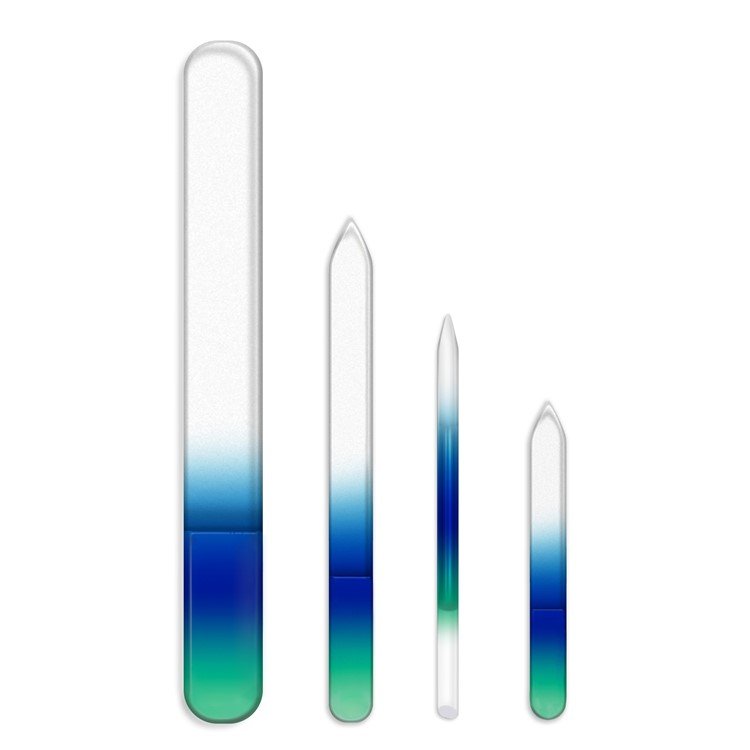
How can buyers tell glass nail file wear from residue or damage?
Start by defining what “wear out” means in the discussion. A surface that feels less abrasive, a visible patch that will not clean off and a broken tip require different records. Calling all three a quality problem leaves the factory without enough information to investigate, and leaves the brand without a clear basis for its customer response.
| Observation | What to check before drawing a conclusion |
|---|---|
| Filing feels slower or smoother | Confirm the use conditions, inspect the working area, and compare the same sample before and after its approved cleaning procedure. |
| A patch, peeling area or change in texture remains | Photograph the location and ask the supplier to compare it with the declared working-face construction and an unused reference. |
| The tip, edge or body is chipped or broken | Remove the damaged sample from use. Record the damage and handling or packaging circumstances separately from the surface-longevity question. |
These checks are a proposed purchasing review, not a standardized durability test. Their purpose is to make the next question precise. An image of a white patch cannot establish whether material has been removed, residue remains or the lighting has changed. A useful record includes the original condition, the area being compared and the actions taken between photographs.
For product selection, keep the relevant glass nail file specification beside that record. It should identify the model being offered. A general category description or a photograph of a similar file cannot resolve a construction question about a different sample.
How can you tell whether a glass nail file is etched or coated?
Ask how the abrasive working face is formed. An etched texture is formed in the glass surface; an applied abrasive layer is a different construction. That distinction is more useful than treating every product sold under the same material name as identical. A supplier's written description should identify the offered model and the working side or sides to which it applies.
GERmanikure's Mantra Glass Nail Files listing describes its texture as chemically etched into the glass. That is a statement about the brand's listed product. It supplies neither a construction declaration nor a durability result for another manufacturer's file.
A photograph can help you check the profile and visible working area. It cannot reliably prove the process used to create that area. A frosted appearance is not enough to approve “chemically etched,” and an uneven-looking patch is not enough to declare that a file has a coating. Price and country-of-origin wording are also poor substitutes for a model-specific explanation.
For an early supplier review, request a short working-face description alongside the product reference. Ask whether the pictured sample represents the construction being quoted and whether decoration overlaps the working area. If a supplier uses several surface options, have the quotation identify the selected option. Otherwise, a correct statement about one file may be copied into the packaging brief for another.
You can then inspect the sample under consistent lighting and magnification, noting visible boundaries, discontinuities or changes after the agreed evaluation. Treat those observations as questions for the supplier. Scraping a file with a sharp object or attacking it with an unapproved solvent is not a reliable way to authenticate its construction; it changes the sample and makes the result harder to interpret.
The supplier's answer should be usable by the person writing the product listing. “Glass nail file” may be the correct category name, while a more specific process description still needs support. Keep those fields separate in the product record. If the construction has not been established, leave the process claim out of the retail copy and continue the technical review.
Community discussion context: Users comparing glass-file longevity and asking how to identify the working surface.
Can cleaning restore a glass nail file that feels smooth?
Cleaning may help when residue is reducing contact with the working texture. It cannot be assumed to reverse a physical change to that texture. The useful comparison is the same sample before and after a cleaning procedure approved for that particular product, with its initial condition and use history recorded.
GERmanikure's glass-file care guide explains that nail dust can accumulate in the textured surface and make it feel smoother. The guide gives cleaning advice for the files it discusses. This is a useful explanation to investigate; it does not establish that every smooth-feeling glass file has the same problem or that the same cleaning method suits another model's decoration and packaging.
Before evaluating samples, ask the supplier to provide care instructions covering the complete supplied item. A file with printed artwork, a decorated handle or an included sleeve raises questions beyond the bare working face. The product record should make clear what may be cleaned, by which method, and what must happen before it is returned to its packaging. Do not add a stronger cleaner simply because the first attempt leaves a mark.
Keep an unused reference and identify the sample being evaluated. Photograph the working area before use, then after the defined filing task, and again after approved cleaning and drying. Keep the light direction and camera position consistent. Record changes in appearance separately from changes in filing feel. This makes it possible to discuss a visible patch without treating a subjective impression as a measured loss of material.
Consider an illustrative sample review. A buyer receives two files and photographs both before evaluating one of them; the other remains unused. After the agreed task, the evaluated sample feels smoother and has a pale area. If approved cleaning removes the pale area and the original filing feel returns, the record supports residue as a possible explanation under those conditions. It does not prove a lifetime. If the appearance or feel does not recover, preserve the sample and ask the supplier to investigate; that result alone still does not identify the manufacturing process.
This example is a proposed comparison, not a Topcom customer case or a reported test result. The evaluation method, number of samples and acceptance criteria need to suit the actual product and intended use. A single favorable sample cannot establish batch consistency, and repeated photographs of the same sample are not independent durability tests.
A chip or crack changes the decision. Stop using the damaged file rather than continuing the comparison. Tweezerman's Glass Nail File care text specifically tells users to handle its glass file carefully and dispose of broken glass carefully. Customer-facing instructions should address damage clearly, even when the brand makes a separate statement about the working surface.
Community discussion context: A user asking about persistent residue and changed filing feel after cleaning.
How long do glass nail files last, and what can a brand promise?
A lifespan claim needs to identify the glass nail file and the use and care conditions covered by its supporting evidence. An expected-use statement, a test result and a warranty each say something different. A brand should be able to identify which one it is putting on the pack.
A useful example of a defined promise appears in Mont Bleu's published FAQ. It limits its lifetime warranty to the filing surface and excludes breakage. That separation matters to a buyer: a customer may reasonably ask whether “lasts a lifetime” refers to continued filing performance, the whole glass item or the remedy available when a problem occurs. Another brand's warranty cannot answer those questions for your product.
Before approving a lifespan statement, put the exact proposed wording next to its evidence. If the wording refers to a test, identify the sample revision, intended-use conditions, method, observations and acceptance criterion. A record showing acceptable performance after one defined evaluation supports that result under those conditions. Converting it into a claim about years of use requires an additional, defensible basis.
Include the working task in that review. A statement evaluated for shaping natural nail edges should not silently expand into an unrestricted promise for every material or task. Ask whether the instructions and validation cover the use shown in your product photography and described in your listing. If the uses differ, resolve that mismatch before the artwork is approved.
For a warranty, agree the scope and customer response as part of the commercial review. Identify what is covered, applicable conditions and exclusions, what information customer service needs, and the available remedy. That exercise may reveal that the retail wording is broader than the supplier's commitment. Resolve it in the product and commercial records, rather than asking customer service to interpret it after launch.
Packaging deserves its own check. A durable-surface claim does not tell you whether a file can move inside its case, contact another hard item or arrive with an exposed tip. Review the actual file and protective format together. Keep packaging observations separate from surface observations so a transit-related problem does not become an unsupported conclusion about abrasion life.
If your team is still comparing formats, use the nail file product-family page to keep that selection separate from the lifespan decision. Once a model is selected, the construction description, care text, approved claim and supporting sample record should all refer to the same revision. Later changes to the working face or decoration should trigger a review of the affected wording.
To discuss a Topcom project, send the glass nail file format, intended use, proposed lifespan wording and protective-pack requirements. Include the observations you want the sample review to resolve, such as a change in filing feel or a persistent surface mark. Those inputs give the discussion a specific purpose before a final product specification and commercial terms are agreed.